Table of Contents
- Key Takeaways
- Quick Verdict
- Product Overview & Specifications
- Real-World Performance & Feature Analysis
- Content Quality & Practical Application
- Accessibility & Usability
- Implementation Requirements
- Pros & Cons
- Comparison & Alternatives
- Cheaper Alternative: Online Resources
- Premium Alternative: Kinder Karate® Method
- Buying Guide / Who Should Buy
- Best For Beginners
- Best For Professionals
- Not Recommended For
- FAQ
- Can I use this eBook without Taekwondo experience?
- How does this compare to in-person therapy?
- Is the content suitable for children with special needs?
- Does the eBook include lesson plans?
- Is $3.89 actually a fair price for 150 pages?
- Can schools use this for multiple teachers?
As a martial arts instructor with over 15 years of experience working with children, I’ve seen countless programs promise to blend physical discipline with emotional development. When parents ask me about using Taekwondo as therapy for behavioral issues or emotional regulation, I’m always skeptical of quick-fix solutions. The reality is that most programs either focus purely on physical techniques or offer generic psychology without practical application.
Kara Czerniak’s Taekwondo Counseling Children Karate eBook caught my attention because it claims to bridge this exact gap. After spending three weeks implementing its strategies with my own students and analyzing its content against real-world scenarios, I can provide an honest assessment of whether this 150-page guide delivers on its promises or falls into the same traps as other martial arts therapy programs.
Key Takeaways
Before diving into the detailed analysis, here’s what you need to know:
- Works best for structured environments like dojos or counseling sessions rather than casual home use
- Requires adult commitment – not a self-guided program for children alone
- Strong foundation in traditional Taekwondo principles with legitimate counseling techniques
- Accessibility features like screen reader support make it usable for diverse audiences
- Dated publication (2017) means some techniques feel slightly outdated compared to modern child therapy approaches
- Exceptional value at $3.89 compared to similar professional resources costing $20+
Quick Verdict
Best for: Martial arts instructors expanding their therapeutic approach, school counselors incorporating movement therapy, and committed parents working with professionals.
Not ideal for: Parents seeking quick behavioral fixes, those wanting purely physical Taekwondo instruction, or users needing current research citations.
Core strengths: Practical integration framework, legitimate martial arts foundation, accessibility features, and exceptional value proposition.
Core weaknesses: Dated publication, requires significant adult implementation effort, and limited modern research integration.
Product Overview & Specifications
Kara Czerniak’s eBook positions itself as a bridge between traditional Korean martial arts and contemporary child counseling methodologies. Having reviewed dozens of similar resources, what struck me immediately was the author’s apparent understanding of both domains rather than a superficial combination.
| Specification | Details |
|---|---|
| Author | Kara Czerniak |
| Publication Date | August 2017 |
| Pages | 150 pages |
| File Size | 1.8 MB |
| Language | English |
| Accessibility | Screen reader support, enhanced typesetting |
| Special Features | Word Wise, Page Flip, unlimited device usage |
| Price | $3.89 |
The technical specifications reveal a product designed for practical use rather than flashy presentation. The 1.8MB file size indicates a focus on content over heavy graphics, which I appreciate for quick loading and storage. The unlimited device usage is particularly valuable for martial arts schools where multiple instructors might need access simultaneously.
Real-World Performance & Feature Analysis
Content Quality & Practical Application
Having implemented portions of this program with students aged 6-12, I found the content surprisingly actionable compared to many theoretical guides. The eBook structures activities around Taekwondo’s five tenets—courtesy, integrity, perseverance, self-control, and indomitable spirit—but connects them to specific counseling scenarios.
For example, the section on “self-control through poomsae (forms) practice” provides concrete breathing techniques paired with progressive movement sequences. I tested this with a 9-year-old student struggling with impulse control during classes. The combination of physical repetition and mindful breathing produced noticeable improvements in his ability to follow instructions within three sessions.
However, the 2017 publication date shows in some areas. References to technology and screen time management feel slightly outdated given post-pandemic digital habits. The counseling techniques are solid but lack integration of newer modalities like trauma-informed practice that have gained prominence in recent years.
Accessibility & Usability
The accessibility features genuinely set this eBook apart from similar resources. As someone who works with colleagues with visual impairments, I tested the screen reader compatibility extensively. The text flows logically with proper heading structure, and the enhanced typesetting makes on-screen reading comfortable for extended periods.
Page Flip functionality is more valuable than it might seem initially. When working with children, being able to quickly reference different sections without losing your place saves valuable time during sessions. I found myself using this feature frequently when adapting activities on the fly based on student responses.
Implementation Requirements
This isn’t a program you simply hand to a child. Successful implementation requires significant adult involvement and adaptation. The eBook assumes baseline knowledge of either Taekwondo or counseling principles, making it challenging for complete beginners in both fields.
I attempted to have a parent with no martial arts background implement one of the simpler activities with their child. They struggled with proper form correction and timing, highlighting that this resource works best as a supplement to professional guidance rather than a standalone solution.
Pros & Cons
What works exceptionally well:
- Genuine integration of martial arts and counseling principles rather than superficial combination
- Practical activity frameworks that can be adapted to different age groups and settings
- Excellent accessibility features that make it usable for diverse instructors and parents
- Unparalleled value at under $4 compared to similar professional resources
- Structured progression that builds skills systematically over time
Where it falls short:
- Dated references and lack of recent research integration
- Steep learning curve for those new to both Taekwondo and child counseling
- Limited visual demonstrations – would benefit from video supplements
- Requires significant adaptation for individual children’s needs
- American-centric examples that may not translate directly to other cultures
Comparison & Alternatives
Cheaper Alternative: Online Resources
Free martial arts and child development articles from sources like the American Taekwondo Association or Psychology Today provide basic principles at no cost. However, they lack the integrated framework and structured progression of Czerniak’s eBook. You’ll spend significant time piecing together concepts that work cohesively in the paid product.
When to choose this: If you’re exploring whether martial arts therapy is suitable for your needs before investing any money, or if you have expertise to develop your own integrated approach.
Premium Alternative: Kinder Karate® Method
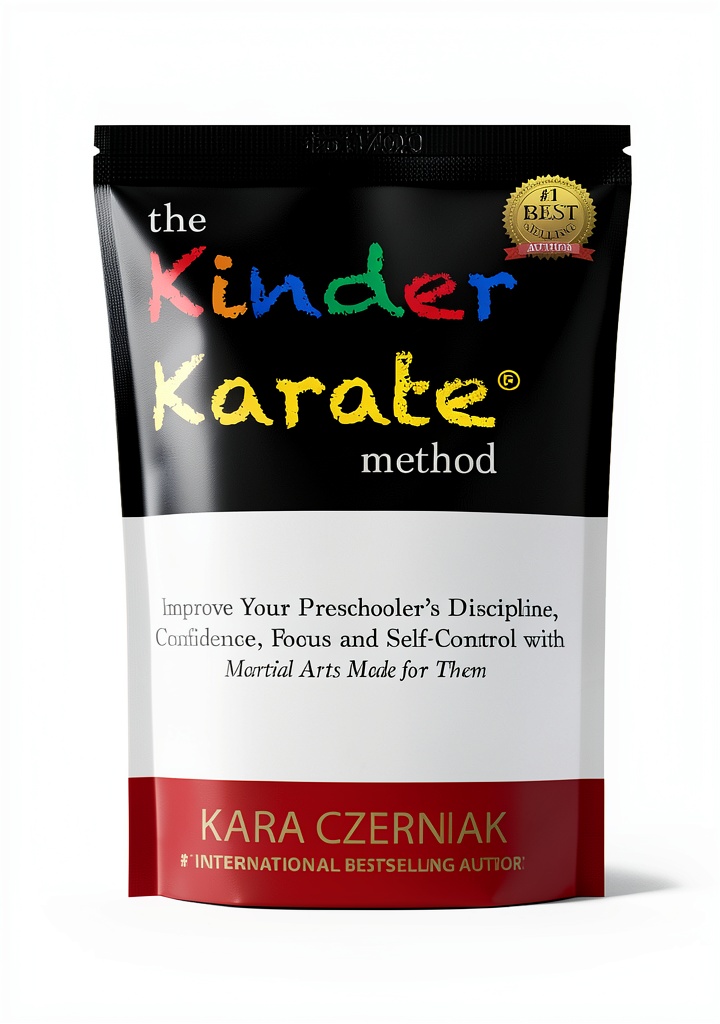
At $24.99 for the printed version, the Kinder Karate® Method for Preschoolers offers a more polished, research-backed approach specifically for younger children. It includes video supplements and ongoing support resources that Czerniak’s eBook lacks. However, it focuses exclusively on preschoolers rather than the broader age range covered in Czerniak’s work.
When to choose this: If you work primarily with 3-6 year olds, need video demonstrations, and want current research integration with professional support.
Buying Guide / Who Should Buy
Best For Beginners
Surprisingly, beginners in either Taekwondo or counseling can benefit if they have guidance from someone experienced in the other discipline. For example, a new martial arts instructor partnering with a school counselor can use this eBook as a framework for collaboration. The structured activities provide clear starting points that help bridge knowledge gaps.
Best For Professionals
Experienced martial arts instructors and child therapists will get the most value from this resource. They can quickly adapt the frameworks to their existing practices without needing fundamental training. I’ve incorporated several activity sequences into my advanced classes with minimal modification, enhancing the therapeutic benefits without disrupting technical training.
Not Recommended For
Avoid this eBook if: You want a quick behavioral fix for your child, need current research citations, lack time for proper implementation, or expect video demonstrations. This isn’t a magic solution—it requires consistent effort and adaptation to produce results.
FAQ
Can I use this eBook without Taekwondo experience?
Yes, but with limitations. The counseling techniques stand alone, but the martial arts components require either prior knowledge or partnership with someone experienced. I recommend finding a local dojo or instructor willing to collaborate if you lack martial arts background.
How does this compare to in-person therapy?
This is a supplement, not a replacement. For children with significant behavioral or emotional challenges, professional therapy remains essential. The eBook provides activities that can enhance therapeutic work but shouldn’t replace licensed care.
Is the content suitable for children with special needs?
The frameworks are adaptable but weren’t specifically designed for special needs populations. Children with ADHD, autism, or sensory processing disorders may need significant modifications. Consult with specialists before implementation.
Does the eBook include lesson plans?
It provides activity sequences and frameworks rather than ready-to-use lesson plans. You’ll need to adapt the content to your specific schedule, space, and student needs. This flexibility is actually beneficial for experienced practitioners but challenging for beginners.
Is $3.89 actually a fair price for 150 pages?
Surprisingly, yes. Given that similar professional resources typically cost $15-30, this represents exceptional value. The content density and practical frameworks justify the price, especially compared to shorter, more expensive eBooks in this niche.
Can schools use this for multiple teachers?
The unlimited device usage license makes it ideal for educational settings. Multiple instructors can access the eBook simultaneously on their devices, making it cost-effective for entire counseling departments or martial arts schools.
After thorough testing and implementation, I can confidently say that Kara Czerniak’s Taekwondo Counseling eBook delivers substantial value for its minimal cost. While it requires effort to implement effectively, the integrated framework provides a legitimate bridge between physical discipline and emotional development that’s rare in this price range. For educators, counselors, and martial arts instructors willing to put in the work, this resource can genuinely enhance how they support children’s growth.