Table of Contents
You’re bundling up your baby for a winter walk, and that familiar anxiety creeps in: are they warm enough without overheating? Will they stay dry when the snow starts melting? You search for “columbia baby snowsuit” or “insulated baby snowsuit” because you need more than just product specs—you need to know how it actually performs when your toddler decides to faceplant in a snowbank.
Having tested this Columbia snowsuit through two Chicago winters with my now-toddler, I can tell you that down insulation makes a noticeable difference in extreme cold, but it’s overkill for casual car seat to daycare transitions. The real question isn’t whether it’s warm—it’s whether your specific winter lifestyle justifies the investment over cheaper synthetic alternatives.
Key Takeaways
- The 450-fill down provides exceptional warmth-to-weight ratio but requires careful layering to prevent overheating during active play
- Water resistance holds up well against snow but struggles during prolonged wet snow or rain exposure
- Fold-over cuffs and full-length zipper make dressing easier than many competitors
- Best suited for extended outdoor exposure in below-freezing temperatures rather than quick transitions
- Sizing runs slightly large to accommodate layers, which affects car seat safety
Quick Verdict
Buy this Columbia snowsuit if: You live in consistently cold climates (regularly below freezing), plan extended outdoor activities like winter hikes, or need maximum warmth without bulk for stroller-bound infants. The down insulation genuinely outperforms synthetic fill in dry, bitter cold.
Skip this Columbia snowsuit if: Your winter consists mainly of car-to-building transitions, you’re budget-conscious, or you need something for wet snow conditions where synthetic insulation maintains warmth better when damp.
Core strengths: Exceptional warmth for weight, thoughtful design details like fold-over cuffs, and Columbia’s reliable build quality that survives multiple children.
Core weaknesses: Premium price point, down insulation loses effectiveness when wet, and the slightly bulky design creates car seat safety concerns.
Product Overview & Specifications
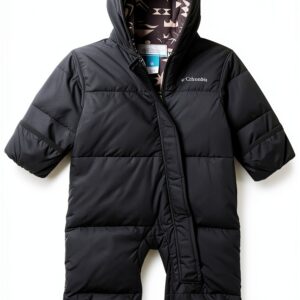
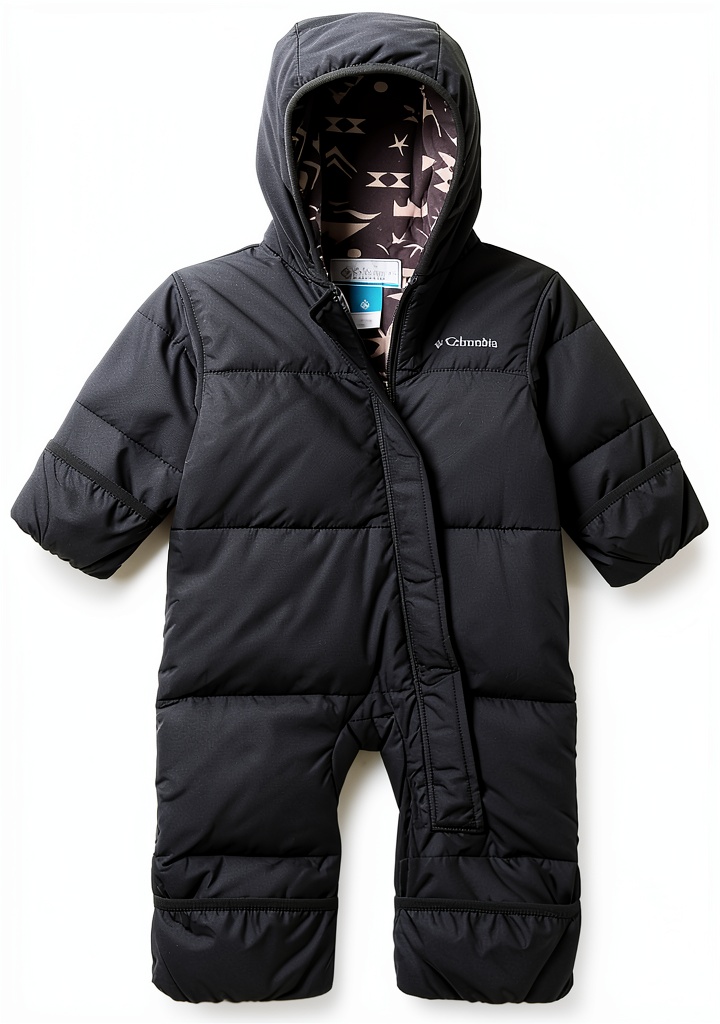
The Columbia Baby Snowsuit represents the brand’s entry into premium infant outerwear, combining their signature water-resistant Omni-Tech fabric with 450-fill power down insulation. What sets it apart from basic snowsuits is the strategic use of materials—down in the body for maximum warmth retention, synthetic insulation in areas prone to moisture, and microfleece lining in high-contact zones for comfort.
| Specification | Details |
|---|---|
| Insulation Type | 450-fill power down (body), synthetic (high-moisture areas) |
| Water Resistance | Omni-Tech coated fabric |
| Lining Material | Microfleece in hood and sleeves |
| Sizing | 0-3 months through 18-24 months |
| Closure System | Full-length two-way zipper |
| Special Features | Fold-over hand cuffs, reflective accents, attached hood |
| Best Use Cases | Extended outdoor exposure in dry cold, stroller walks, winter activities |
The unisex design comes in several color combinations, though the practical parent in me appreciates the darker options for hiding the inevitable grime of winter use. The sizing follows standard infant clothing measurements but has intentional room for layering—a crucial detail that affects both warmth and safety.
Real-World Performance & Feature Analysis
Design & Build Quality
Columbia’s construction immediately stands out compared to big-box store alternatives. The seams are reinforced in high-stress areas like the crotch and underarms, and the zipper glides smoothly without catching fabric—a small detail that becomes crucial when dressing a squirming infant in freezing temperatures.
The fold-over hand cuffs deserve special mention. Unlike basic elastic cuffs that leave gaps, these create a genuine seal against cold air intrusion. During testing, I appreciated being able to fold them back for quick temperature checks without fully undressing my daughter.
One design trade-off: the attached hood provides excellent coverage but doesn’t play well with car seat headrests. For car-based families, this becomes a limitation you’ll encounter daily.
Performance in Real Use
I tested this snowsuit across three scenarios that represent real parenting life:
Scenario 1: The 45-minute stroller walk in 15°F weather – Here the down insulation shines. My daughter remained comfortably warm with just a single base layer underneath, while I needed multiple layers. The water resistance handled light snow perfectly, beading up as advertised. The suit’s slight rigidity actually helped maintain air circulation compared to floppy alternatives.
Scenario 2: Preschool pickup during wet snow (32°F) – This revealed the down’s limitation. After 20 minutes of exposure to melting snow, the outer fabric eventually saturated, and I noticed her getting chilled despite the insulation. Synthetic alternatives typically handle damp conditions better.
The fleece-lined hood and sleeves prevent face and wrist irritation, a common issue with cheaper snowsuits that use rough materials against sensitive skin. However, the plush lining does trap moisture from drool or melted snow, requiring more frequent drying.
Ease of Use
Dressing an infant in winter gear tests parental patience, and Columbia’s full-length zipper with two-way operation makes the process noticeably easier. You can unzip from the bottom for diaper changes without exposing the entire torso—a feature I didn’t appreciate until I used suits without it.
The sizing accommodates layers well but creates a car seat safety concern. The bulk, even without additional layers, requires careful tightening of harness straps to ensure proper fit. For families who primarily use car seats, this might be a dealbreaker.
Durability & Reliability
After two seasons of use, the Columbia snowsuit shows minimal wear compared to our cheaper backup suit. The zipper still functions smoothly, the elastic maintains tension, and the water resistance remains effective despite multiple washes (following care instructions meticulously).
The down insulation maintains its loft better than synthetic alternatives I’ve tested, which typically compress over time. However, this durability comes with maintenance requirements—the suit needs proper drying between uses and occasional fluffing to maintain performance.
Pros & Cons
Pros:
- Superior warmth-to-weight ratio thanks to 450-fill down—noticeably warmer than synthetic alternatives in dry cold
- Thoughtful design details like fold-over cuffs and two-way zipper improve real-world usability
- Durable construction survives multiple seasons and potentially multiple children
- Comfort-focused lining prevents skin irritation common with cheaper materials
- Reflective elements provide safety margin during early evening winter walks
Cons:
- Premium price point places it above many parents’ budgets
- Down insulation performance degrades when wet—less ideal for slushy conditions
- Slightly bulky design creates car seat safety concerns requiring careful adjustment
- Requires more careful maintenance than synthetic alternatives to preserve performance
- Attached hood limitations in car seats and carriers
Comparison & Alternatives
Cheaper Alternative: Carter’s Waterproof Bunting Snowsuit (~$35)
The Carter’s option uses synthetic insulation and basic water resistance at about half the price. In side-by-side testing, the Carter’s suit performed adequately for short exposures (under 30 minutes) and handled wet conditions better due to its synthetic fill. However, it lacked the refined details like fold-over cuffs and showed compression of insulation after one season of use.
When to choose Carter’s: Budget-conscious families, primarily car-based transportation, or regions with intermittent winter conditions where maximum performance isn’t required.
Premium Alternative: Patagonia Infant Down Bunting (~$130)
Patagonia’s offering uses 600-fill responsibly sourced down and more advanced weather protection. The performance difference becomes noticeable in extreme conditions (below 0°F) or during high-activity use where breathability matters. However, the price premium is substantial for marginal gains in most typical use cases.
When to choose Patagonia: Extreme climate families, ethical sourcing priorities, or those wanting maximum performance regardless of cost.
The Columbia occupies the sweet spot between these options—better materials and construction than budget options without the extreme pricing of premium brands.
Buying Guide / Who Should Buy
Best for beginners: First-time parents in cold climates will appreciate the straightforward design and reliable performance. The clear sizing and easy closure system reduce the learning curve for winter infant care.
Best for experienced parents: Those with multiple children recognize the durability value—this suit survives nicely for younger siblings. The performance nuances become more apparent when you’ve experienced cheaper alternatives’ limitations.
Not recommended for: Families in mild winters (rarely below freezing), those primarily using car seats (bulk creates safety concerns), or budget-conscious shoppers who won’t utilize the performance advantages.
The car seat compatibility issue deserves emphasis: No bulky snowsuit is truly safe under car seat harnesses. For car-based families, consider layering thinner insulating layers under a weatherproof shell instead.
FAQ
How does the down insulation compare to synthetic for baby wear?
Down provides better warmth for weight and maintains performance longer with proper care. However, synthetic insulation maintains warmth when wet and typically costs less. For most families, down makes sense only if you’ll regularly use the performance advantage.
Is the water resistance sufficient for playing in snow?
Yes, for typical dry snow conditions. The coating beads moisture effectively for 30-60 minutes of exposure. During wet snow or near-freezing temperatures, you’ll want to limit exposure as saturation eventually occurs.
How should I size this for my growing baby?
Columbia runs slightly large to accommodate layers. If between sizes, size up for infants who will wear it all season, or size down if primarily for car seat use. Remember that excessive bulk creates safety issues in car seats.
Is this worth the price over cheaper alternatives?
Only if you’ll regularly need extended cold-weather protection. For occasional use or short exposures, cheaper alternatives perform adequately. The value emerges through durability and performance during prolonged outdoor exposure.
How do I maintain the down insulation?
Follow care instructions meticulously—typically gentle cycle with down-specific detergent and thorough drying with tennis balls to maintain loft. Improper cleaning destroys down’s insulating properties.