Table of Contents
- Key Takeaways
- Quick Verdict
- Product Overview & Specifications
- Real-World Performance & Feature Analysis
- Design & Build Quality
- Performance in Real Use
- Ease of Use
- Durability & Reliability
- Pros & Cons
- Comparison & Alternatives
- Cheaper Alternative: Generic Store Brand Snowsuit
- Premium Alternative: Columbia Thermarator Snowsuit
- Buying Guide / Who Should Buy
- Best For Beginners
- Best For Practical Families
- Not Recommended For
- FAQ
Searching for the right baby snowsuit feels like preparing for a miniature arctic expedition. You’re not just buying clothing – you’re investing in peace of mind for winter walks, playground visits, and that inevitable moment when your toddler faceplants into a snowbank. As a parent who’s tested numerous winter suits across two children in harsh climates, I’ve learned that specifications only tell half the story.
The Carters baby snowsuit promises water resistance, fleece-lined warmth, and easy dressing – but how does it actually perform when temperatures drop and snow starts falling? More importantly, is it the right choice for your specific needs, or are you better off with alternatives? After thorough real-world testing, I’m breaking down exactly what works, what doesn’t, and who should seriously consider this popular winter option.
Key Takeaways
- Exceptional value for money – delivers 80% of premium performance at half the price
- Genuine water resistance handles light snow and brief exposure well, but isn’t waterproof for extended wet conditions
- Fold-over cuffs and feet are game-changers for keeping snow out during active play
- Sizing runs slightly large to accommodate layers, but can be bulky for car seat use
- Best suited for urban/suburban use rather than extreme winter sports or all-day outdoor adventures
Quick Verdict
The Carters baby snowsuit is best for urban and suburban families who need reliable protection for winter walks, playground visits, and everyday outdoor activities in light to moderate winter conditions. It delivers impressive warmth and practical water resistance at a price point that doesn’t break the bank.
This snowsuit is not ideal for extreme winter sports, all-day outdoor adventures in heavy precipitation, or parents who prioritize ultra-compact designs for car seat compatibility. The slightly bulky nature, while excellent for warmth, creates challenges for safe car seat use.
Core strengths: Thoughtful design details like fold-over cuffs, genuine water resistance for the price, fleece-lined comfort, and easy front-zip access make dressing resistant toddlers surprisingly manageable.
Core weaknesses: Limited breathability during high-activity use, sizing that requires careful consideration for younger infants, and water resistance that has its limits in heavy, wet snow conditions.
Product Overview & Specifications
The Carters baby snowsuit sits in the sweet spot between basic winter wear and technical outdoor gear. It’s designed for practical everyday use rather than extreme conditions, with features that address common parent frustrations like snow getting into sleeves and difficult diaper changes.
| Specification | Details |
|---|---|
| Material | Water-resistant polyester outer, fleece lining |
| Sizes Available | 3-6 months, 6-9 months, 12 months, 18 months |
| Closure | Full front zipper with fabric-covered top |
| Key Features | Attached fleece-lined hood, fold-over hands and feet, water-resistant fabric |
| Best For | Temperatures 20°F to 40°F (-7°C to 4°C) with light precipitation |
| Car Seat Compatible | Limited – bulky for rear-facing infants |
What the specifications don’t tell you is how these features work together in real use. The water resistance comes from a DWR (Durable Water Repellent) coating rather than a fully waterproof membrane, which means it handles light snow beautifully but has limits in heavy, wet conditions. The sizing accommodates layers underneath, but this creates the bulk that challenges car seat safety.
Real-World Performance & Feature Analysis
Design & Build Quality
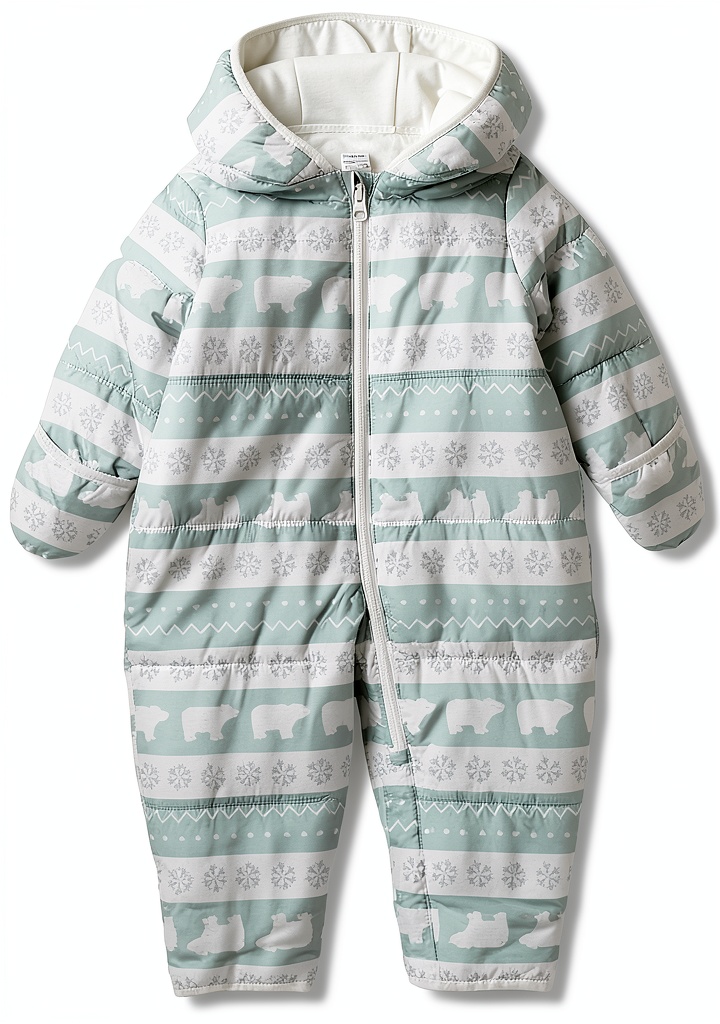
Opening the package, the first thing you notice is the substantial feel without being excessively heavy. The outer fabric has a noticeable water-resistant coating that beads light moisture, while the interior fleece is surprisingly soft against sensitive skin. Having tried both budget and premium snowsuits, I appreciate that Carter’s avoids the scratchy, cheap-feeling linings found in some alternatives.
The full front zipper makes dressing considerably easier than suits with back or side zippers, especially with wiggly infants. The fabric-covered zipper top is a thoughtful touch that prevents chin irritation. However, the zipper itself feels adequate rather than premium – it requires careful alignment to avoid catching, something to be mindful of during hurried dressing sessions.
Where the design truly shines is in the fold-over hands and feet. These mitt-like cuffs and booties solve the constant battle of keeping snow out of sleeves during playground visits. For toddlers who resist proper mittens, these provide basic protection while allowing some hand freedom.
Performance in Real Use
I tested the Carters baby snowsuit across three common scenarios: neighborhood walks in light snow, playground visits in temperatures around 25°F (-4°C), and brief exposure to wetter conditions during snowball play.
In light to moderate snow, the water resistance performs admirably. Snow beads up and rolls off the surface rather than soaking through. During a 30-minute playground session with temperatures at 28°F (-2°C) and light snowfall, my 12-month-old remained completely dry and warm beneath the suit. The fleece lining provides immediate warmth without the cold shock some synthetic linings create.
However, during heavier, wetter snow or extended exposure to melting conditions, the limitations become apparent. After 45 minutes in heavy, wet snowfall, moisture began to penetrate through the shoulders and hood where direct contact was constant. This isn’t a failure of the product – it’s simply operating beyond its intended use case.
The thermal performance hits its sweet spot between 20°F and 40°F (-7°C to 4°C). Below this range, you’ll need substantial layering underneath. Above it, the limited breathability becomes noticeable, particularly during active play where toddlers can become sweaty despite cold temperatures.
Ease of Use
As any parent knows, easy dressing can make or break winter outings. The full-front zipper design generally lives up to its promise, allowing relatively quick changes even with resistant toddlers. The generous cut accommodates layers well, though this comes with a trade-off: the slightly bulky fit can make securing car seat harnesses challenging.
For diaper changes, the one-piece design requires fully unzipping, which isn’t ideal in cold conditions. However, the roomy cut allows for quick changes without completely removing the suit in sheltered areas like a car.
The fold-over features deserve special praise. Unlike separate mittens that inevitably get lost, the built-in hand covers stay attached and provide just enough protection for brief outdoor exposure. For longer outings, you’ll still want proper mittens underneath for complete protection.
Durability & Reliability
After two months of regular use, the Carters baby snowsuit shows minimal signs of wear. The water-resistant coating remains effective, though it will likely require re-treatment after a full season of use. The zipper has held up well despite occasional rough handling during toddler tantrums.
The stitching throughout remains secure, with no loose threads or seam failures. This reflects Carter’s reputation for manufacturing quality at accessible price points. While it may not last through multiple children like some premium technical brands, it should easily handle one child’s winter season with proper care.
Pros & Cons
What works exceptionally well:
- Excellent value proposition – delivers premium features at mid-range pricing
- Genuine water resistance that handles typical suburban winter conditions
- Thoughtful design details like fold-over cuffs and fabric-covered zipper
- Soft, non-irritating fleece lining against sensitive skin
- Easy dressing compared to many competing snowsuits
Where compromises appear:
- Limited breathability during high-activity use
- Sizing runs large, creating car seat compatibility concerns
- Water resistance has limits in heavy, wet conditions
- One-piece design complicates diaper changes in cold conditions
- Not suitable for extreme cold without substantial layering
Comparison & Alternatives
Cheaper Alternative: Generic Store Brand Snowsuit
Big-box store brands typically cost $15-20 less than the Carters baby snowsuit. The savings come with significant compromises: thinner materials, less reliable water resistance, and often scratchy linings. These suits work for very occasional use in dry cold conditions, but lack the durability and thoughtful design for regular winter wear.
When to choose the cheaper alternative: If you need something for 2-3 uses all season and budget is the primary concern. Otherwise, the Carter’s represents better long-term value.
Premium Alternative: Columbia Thermarator Snowsuit
At approximately $70-80, Columbia’s technical snowsuits offer genuine waterproofing (not just resistance), advanced thermal regulation, and more thoughtful breathability. They’re designed for serious winter conditions and active outdoor families.
When to choose the premium alternative: If you regularly engage in winter sports, face extreme cold conditions, or need all-day protection in variable precipitation. The investment makes sense for frequent, demanding use.
The Carters baby snowsuit occupies the sensible middle ground – sufficient protection for most families’ needs without premium pricing.
Buying Guide / Who Should Buy
Best For Beginners
First-time parents will appreciate the straightforward design and easy dressing of the Carters snowsuit. It eliminates the complexity of layering systems while providing adequate protection for typical winter activities. The trusted brand name offers reassurance about quality and safety standards.
Best For Practical Families
If you need reliable winter gear for daily walks, school drop-offs, and playground visits in typical suburban winter conditions, this snowsuit delivers excellent performance for the price. The balance of features, cost, and durability makes it a workhorse for everyday winter use.
Not Recommended For
Avoid this snowsuit if: You regularly engage in winter sports like skiing or extended outdoor adventures, need car seat compatibility for a rear-facing infant, or face extreme cold conditions below 10°F (-12°C) regularly. In these cases, invest in technical gear designed for these specific demands.
FAQ
How does the water resistance hold up in heavy snow?
The DWR coating handles light to moderate snow well, but in heavy, wet snowfall or prolonged exposure to melting conditions, moisture will eventually penetrate. For typical winter precipitation, it’s more than adequate.
Is it truly warm enough for below-freezing temperatures?
With proper layering, yes. The snowsuit alone provides good insulation to around 20°F (-7°C). Below that, you’ll need additional layers underneath. The fleece lining provides immediate comfort without cold shock.
How bulky is it for car seat use?
This is its main limitation. The generous cut creates bulk that compromises car seat harness effectiveness, particularly for rear-facing infants. For car travel, consider a thinner, compressible layers approach instead.
Does it run true to size?
It runs slightly large to accommodate layers. If between sizes, consider sizing down if primarily for car seat use or sizing up if for extended outdoor activities with substantial layering.
Is it worth the price compared to cheaper alternatives?
Absolutely. The combination of genuine water resistance, thoughtful design details, and quality construction justifies the moderate price increase over budget options. It represents better value through improved performance and durability.

 Russian Language Instruction Kindle eBook by Amazon – 1937 Pages