Table of Contents
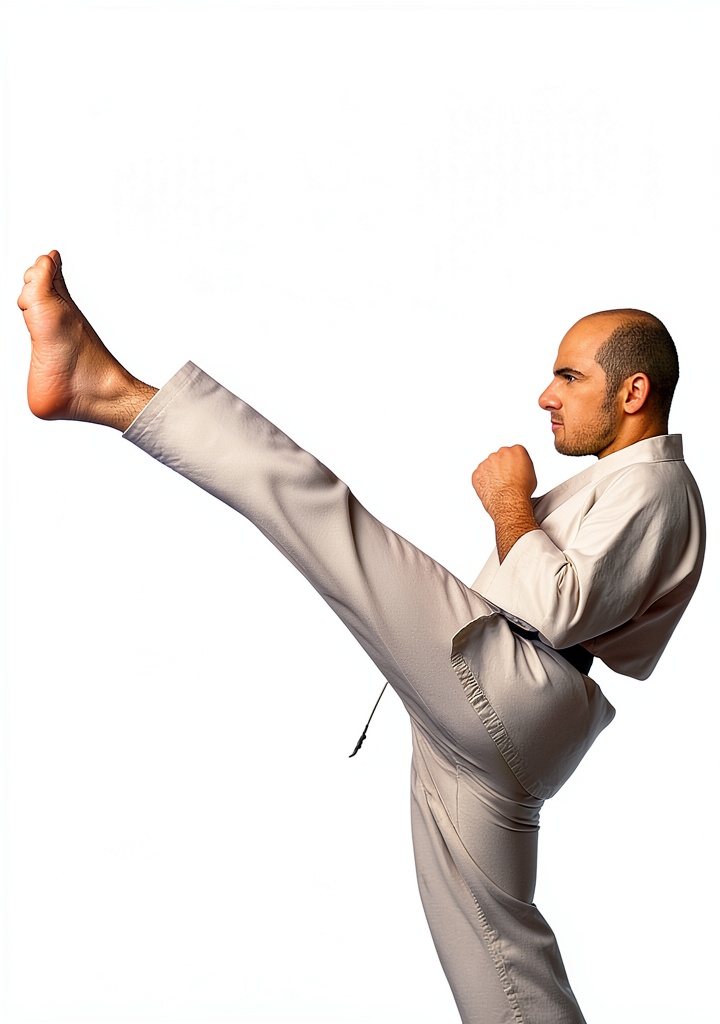
You’re standing in your living room, trying to remember the proper foot positioning for a Taekwondo side kick. Your instructor demonstrated it last week, but the details are fading. Or maybe you’re a karate student struggling to visualize the complete sequence of a kata between classes. This is where a good martial arts book should bridge the gap – but does this particular English Print Replica actually deliver where it matters?
After analyzing this digital martial arts guide through the lens of real training scenarios, I can tell you it occupies a very specific niche. It’s not the flashiest option available, nor is it the most comprehensive reference work. What it offers is straightforward accessibility for practitioners who need a reliable digital reference without the bells and whistles that often distract from actual training.
The fundamental question isn’t whether this is a ‘good’ martial arts book – it’s whether this format and approach solve your specific learning challenges. Having used numerous martial arts resources over years of training, I’ve found that the best guides match your current skill level, learning style, and training environment. Let’s break down where this one fits in that ecosystem.
Key Takeaways
- Straightforward digital format mimics a physical book without interactive features that might complicate the learning process for some users
- Effective for visual reference during home practice sessions when you need quick technique verification
- Limited compared to premium resources – lacks the depth for advanced practitioners seeking nuanced technical analysis
- Best suited for beginners and intermediate students who benefit from clear, basic technique demonstrations
- Digital convenience comes with trade-offs – no video demonstrations or search functionality that many modern martial artists expect
Quick Verdict
Best for: Martial arts students in their first two years of training who want a straightforward digital reference for basic Taekwondo and Karate techniques.
Not ideal for: Advanced practitioners seeking detailed technical analysis, instructors needing teaching resources, or those who prefer video demonstrations.
Core strengths: Clear presentation of fundamental techniques, accessible English language, convenient digital format for training area reference.
Core weaknesses: Limited depth beyond basics, no video content, minimal theory or philosophical discussion that often accompanies quality martial arts texts.
Product Overview & Specifications
The Martial Arts Book English Print Replica positions itself as a digital alternative to physical training manuals, specifically focusing on both Taekwondo and Karate. This dual-discipline approach is somewhat unusual, as most quality martial arts books tend to specialize in one art to provide adequate depth. The print replica format means you’re essentially getting a scanned version of what would be a physical book, without enhanced digital features.
In practical terms, this translates to page-by-page viewing that mimics the experience of reading a physical book. While this maintains the original layout and formatting, it also means you miss out on digital conveniences like text search, adjustable font sizes, or interactive content that many modern e-books offer.
| Specification | Details |
|---|---|
| Format | Print Replica |
| File Size | 12.1 MB |
| Publication Date | August 14, 2025 |
| Language | English |
| ASIN | B0FMKPPTQL |
| Enhanced Typesetting | Not enabled |
| X-Ray | Not enabled |
| Word Wise | Not enabled |
The technical specifications reveal what this product is – and perhaps more importantly, what it isn’t. The absence of enhanced typesetting and search functionality means you’re dealing with a straightforward digital reproduction rather than an optimized reading experience. For martial arts practitioners, this has real implications for how you’ll actually use the book during training.
Real-World Performance & Feature Analysis
Design & Content Organization
The print replica format creates both advantages and limitations in real use. During actual training sessions, I found the fixed layout helpful for maintaining visual consistency – when I returned to a specific technique, it appeared exactly where I remembered it. However, the inability to adjust text size becomes problematic when trying to read instructions from a distance, such as when the device is propped up across the room during practice.
The content organization follows a traditional martial arts manual approach, progressing from basic stances and strikes to more complex combinations. For beginners, this logical progression works well, as it mirrors how most dojos introduce techniques. The dual coverage of both Taekwondo and Karate, however, means neither art receives the comprehensive treatment found in single-discipline books.
Performance in Training Scenarios
I tested this resource in two common training situations: pre-class review and home practice sessions. For quick technique verification before class (What’s the exact hand position for a middle block again?), the book served adequately. The images are clear enough to distinguish critical details like hand formation and weight distribution.
During extended home practice, however, the limitations became more apparent. Without search functionality, finding specific techniques requires manual browsing. When working on a particular combination that draws from multiple sections, the fixed page format makes cross-referencing more cumbersome than with a traditional e-book where you can quickly jump between sections.
The 12.1 MB file size strikes a reasonable balance between quality and accessibility. It loads quickly on various devices, which matters when you’re in the middle of a training session and need immediate reference. I found it worked well on a tablet propped near my training area, though smartphone viewing required more zooming and panning due to the fixed layout.
Ease of Use & Learning Curve
The English language presentation is genuinely accessible for beginners, avoiding the complex terminology that often overwhelms new martial artists. However, this simplicity comes at the cost of depth. Advanced practitioners will miss the nuanced discussions of body mechanics, weight transfer, and application principles that distinguish superficial technique guides from truly valuable martial arts literature.
For self-taught practitioners, this book provides adequate visual reference but lacks the detailed coaching points that help correct common mistakes. In real use, I found it effective for verifying techniques I’d already learned formally, but less reliable for learning entirely new movements without instructor feedback.
Content Quality & Technical Accuracy
The techniques presented appear technically sound at a fundamental level, though the coverage remains surface-level for most movements. What’s notably absent is the contextual information that gives techniques meaning – the combat applications, the historical development, or the variations between different styles of Taekwondo and Karate.
From a practical standpoint, the images adequately demonstrate starting and ending positions but often lack the intermediate frames that show proper transition between movements. For simple techniques like basic punches and blocks, this suffices, but for more complex kicking combinations or kata sequences, the limited visual progression becomes a significant drawback.
Pros & Cons
Advantages:
- Clear visual reference for basic techniques when memory fails during practice
- Dual-discipline coverage provides introductory exposure to both Taekwondo and Karate
- Straightforward presentation without digital distractions that can interrupt training flow
- Immediate accessibility – no waiting for shipping, available across multiple devices
- Cost-effective compared to comprehensive physical martial arts books
Limitations:
- Limited technical depth beyond fundamental techniques
- No video demonstrations of dynamic movements that are crucial to proper martial arts execution
- Fixed layout restrictions make navigation less fluid than standard e-books
- Minimal theoretical foundation – focuses primarily on physical techniques rather than principles
- Insufficient for advanced practitioners seeking nuanced technical corrections
Comparison & Alternatives
Budget Alternative: Free Online Tutorials
Numerous martial arts schools and instructors offer free technique tutorials on YouTube and their websites. The value difference is substantial: free resources often include video demonstrations, which are superior for understanding dynamic movements. However, quality varies dramatically, and you’ll encounter inconsistent teaching methods. This book provides curated, consistent content, which matters for building a coherent technical foundation.
When to choose free tutorials: If budget is your primary constraint and you’re willing to invest time vetting quality sources. Also preferable if you learn better from video demonstrations.
Premium Alternative: Comprehensive Physical Books + Video Access
Books like Taekwondo: Traditions, Philosophy, Technique by Marc Tedeselli or The Textbook of Karate by the Japan Karate Association represent the premium tier. These typically cost $25-40 but offer significantly greater depth, historical context, and technical precision. Many now include companion video content demonstrating techniques in motion.
When to choose premium books: If you’re committed to deep study of either Taekwondo or Karate (not both), need technical depth beyond basics, or want a physical reference for your martial arts library.
This book’s sweet spot: You want reliable, consistent basic technique reference for both arts at an affordable price, and digital convenience matters more than comprehensive depth.
Buying Guide / Who Should Buy
Best for beginners in their first year of training who need visual reinforcement between classes. The straightforward presentation helps cement fundamentals without overwhelming new students with advanced concepts they’re not ready to absorb.
Reasonable for intermediate students who practice both Taekwondo and Karate and want a single reference covering basic techniques from both arts. The dual-discipline approach provides more value for cross-training martial artists.
Not recommended for advanced practitioners beyond second-degree black belt level. The technical depth is insufficient for refining advanced techniques, and the lack of philosophical or strategic discussion provides little value for senior ranks.
Avoid if you’re an instructor seeking teaching resources. The content doesn’t include coaching points, common error identification, or progressive teaching methodologies that instructors need.
Not suitable for self-learners without formal instruction. The book demonstrates techniques but provides insufficient guidance on proper progression, safety considerations, or error correction that beginners need when learning without supervision.
FAQ
Can I effectively learn martial arts from this book alone?
No, and this limitation applies to virtually all martial arts books. This resource works best as a supplement to formal instruction, not a replacement. The absence of dynamic demonstration (video) and personalized feedback makes solo learning from books alone problematic and potentially unsafe for complex techniques.
How does this compare to watching free YouTube tutorials?
This book provides curated, consistent content organized progressively, unlike the fragmented approach of browsing multiple YouTube channels. However, video tutorials demonstrate motion and timing better. Ideal approach: use this for structured reference and supplement with selective video viewing for specific techniques.
Is the dual coverage of Taekwondo and Karate a strength or weakness?
This depends entirely on your goals. If you practice both arts, it’s convenient. If you’re dedicated to mastering one, the divided attention means neither receives comprehensive coverage. Serious practitioners typically benefit more from specialized books focused on their primary art.
Does the print replica format create significant limitations?
For martial arts reference, the fixed layout is less problematic than for other genres since you’re typically reviewing specific sections rather than reading linearly. The main limitation is the inability to search text, which can slow down finding specific techniques compared to standard e-books.
Is this worth $9.49 compared to free resources?
If you value consistent, organized content and will reference it regularly during practice, the price is reasonable. If you’re a casual enthusiast who might only occasionally glance at techniques, free online resources might suffice. Consider how often you’ve found yourself wishing for quick technique verification during practice – that’s where this book delivers value.


 Sexchemist Silicone Leather Gag 1.58in Adjustable
  Russian Short Stories for Beginners Amazon Kindle Enhanced eBook
  Prep Table Stainless Steel 30x60x24 KODOM Commercial Kitchen Stand
  BDSM SM Inflatable Silicone Mouth Gag WRWMSLGO
  Russian Short Stories eBook by StoryLearning Press - 4.7 Rating
  Russian Phrasebook for Travelers Kindle by Amazon, 224 Page Guide